
Cut Flower Varieties I Recommend for Your First Cutting Garden

Cut Flower Varieties I Recommend for Your First Cutting Garden
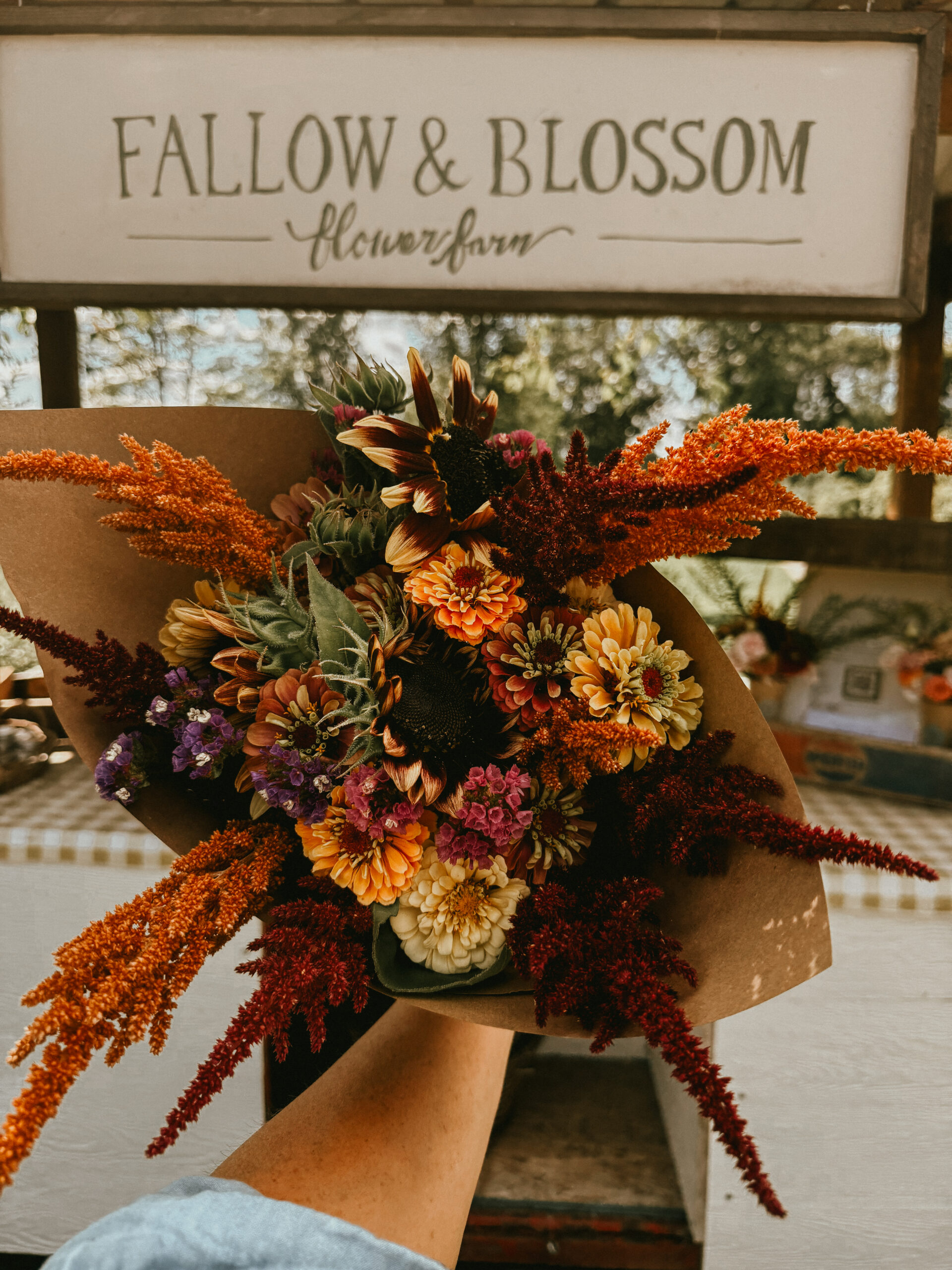
If I could go back to the beginning of my gardening years and hand myself one piece of advice, it would be this: start a cutting garden. Even a small one. Even just a row along the fence or a few pots near the back door.
There is something that happens when you grow your own flowers. You stop walking past them. You start actually seeing them. And when you bring them inside and set them in a jar on the kitchen table, something shifts in the whole feeling of a room.
I get asked fairly often where to start with cut flowers, so I put together this list of the varieties I grow every single season without question. These are not the fanciest flowers or the most complicated ones. They are the ones that deliver, season after season, without much fuss. If you are planting your first cutting garden this year, start here.
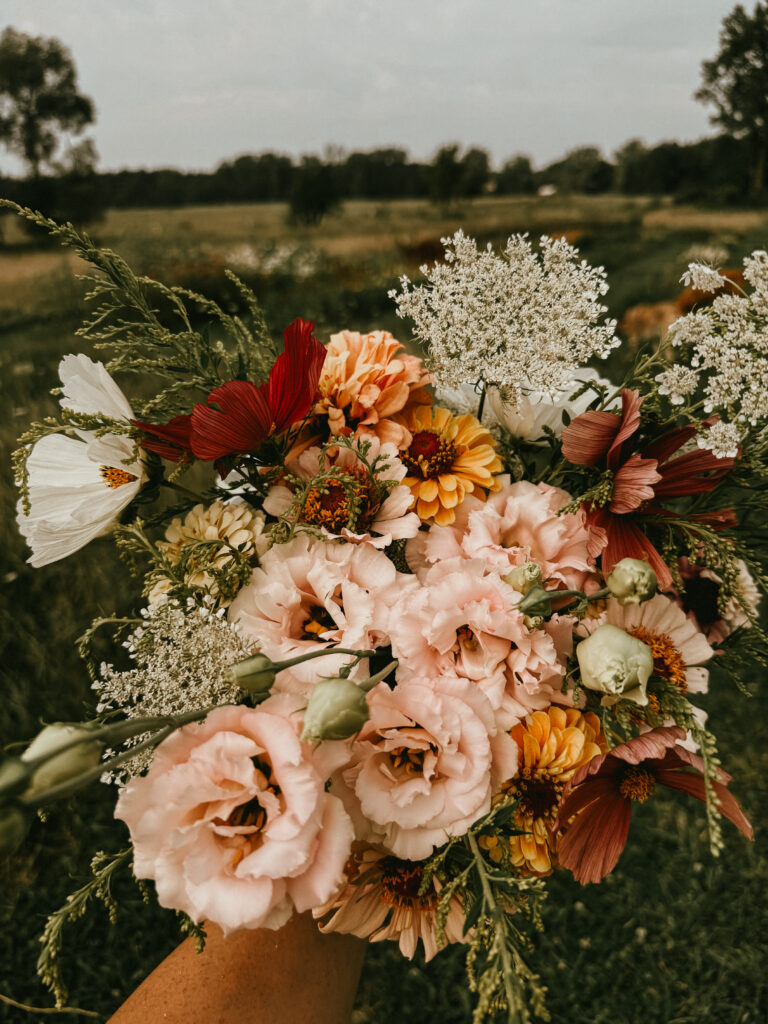
All of the varieties in this post are linked through Botanical Interests, which is where I source many of my seeds. And if you want a full breakdown of how to plan and grow a productive cutting garden from seed, my cut flower guide is a good place to begin. You can find it here. Flowers on the Homedtead Guide
Now let’s talk flowers.
Zinnias
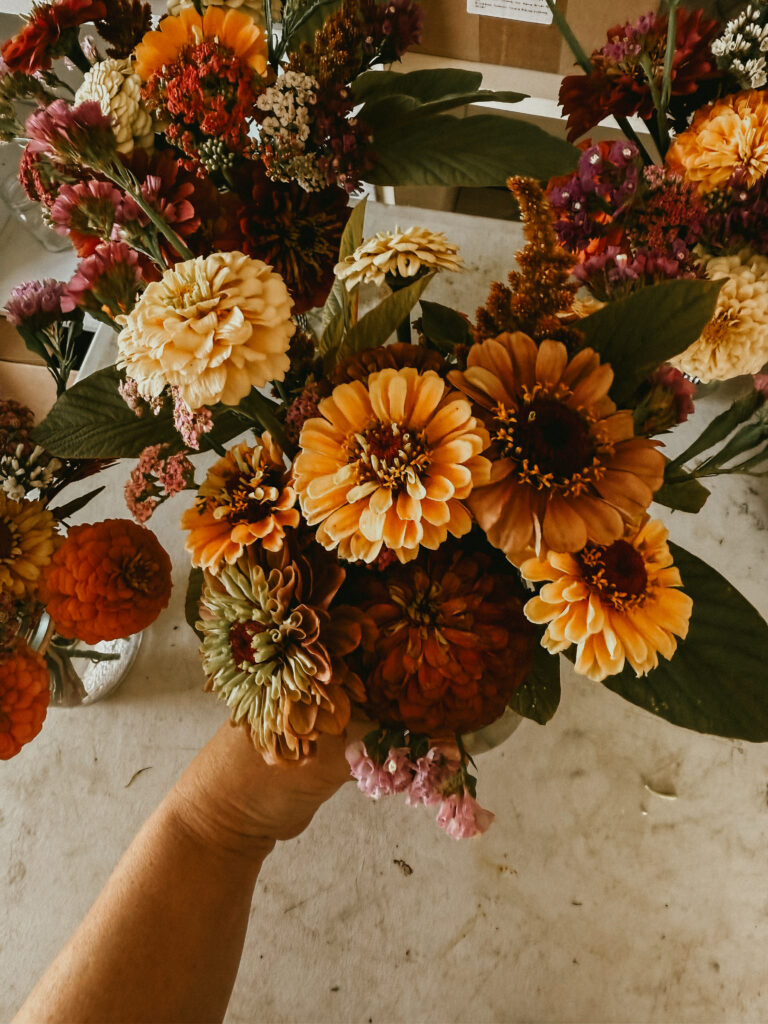
If you only grow one type of cut flower your first season, make it zinnias. They are fast, they are forgiving and they produce more blooms than you will know what to do with. Every time you cut a stem, the plant responds by sending up two more. That kind of generosity makes them an ideal starting point for anyone just getting a cutting garden going.
These are the two varieties I plant every year without fail.
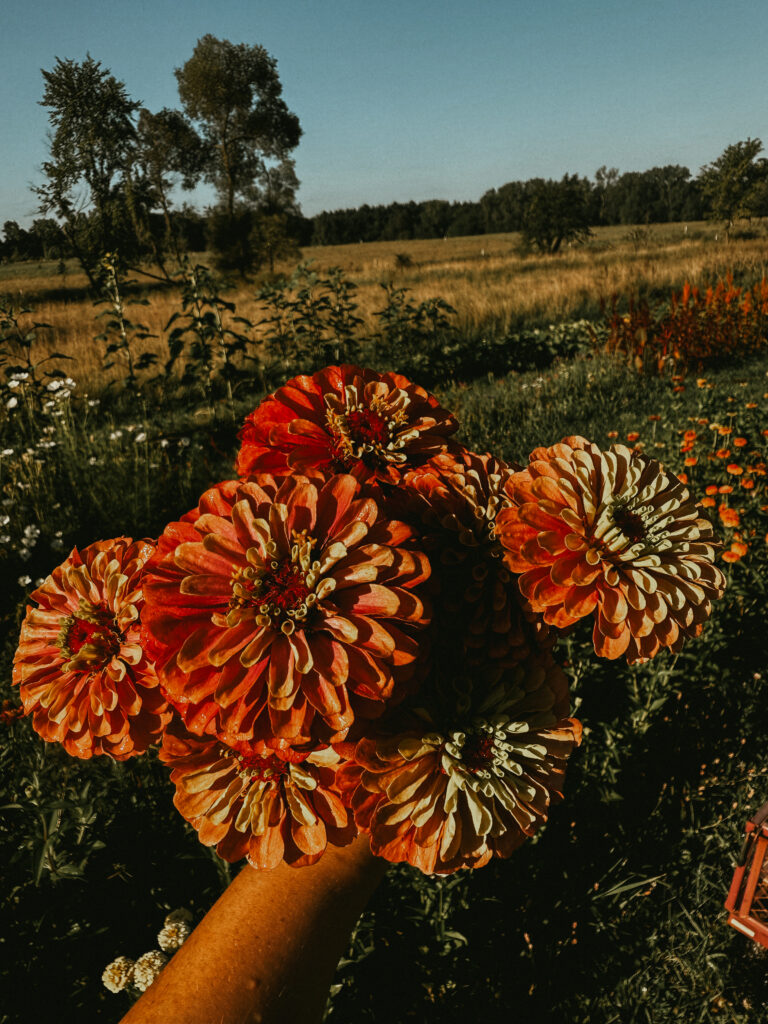
Queeny Lime Red is the one that stops people mid-sentence. The color is a warm coral-red with a lime-tinted center that somehow makes every flower around it look more interesting. I put it in nearly every arrangement I make and I have never once regretted it.
Queen Lime Orange is warm and rich in a way that feels almost autumnal even in the middle of summer. The orange tones are deep and saturated with that same signature lime quality running through the center, and it pairs beautifully with the deeper burgundy tones of the Evening Sun sunflowers later in the season. If you are drawn to warm, earthy arrangements, this is the zinnia for you.
Cosmos
Cosmos are a little wild and I mean that as the highest compliment. They move in the wind, they fill in the spaces that more structured flowers leave behind and they bring a romantic, cottage garden quality that is very hard to replicate with anything else. They are also remarkably easy to grow from direct sow, which makes them a wonderful choice for beginners.
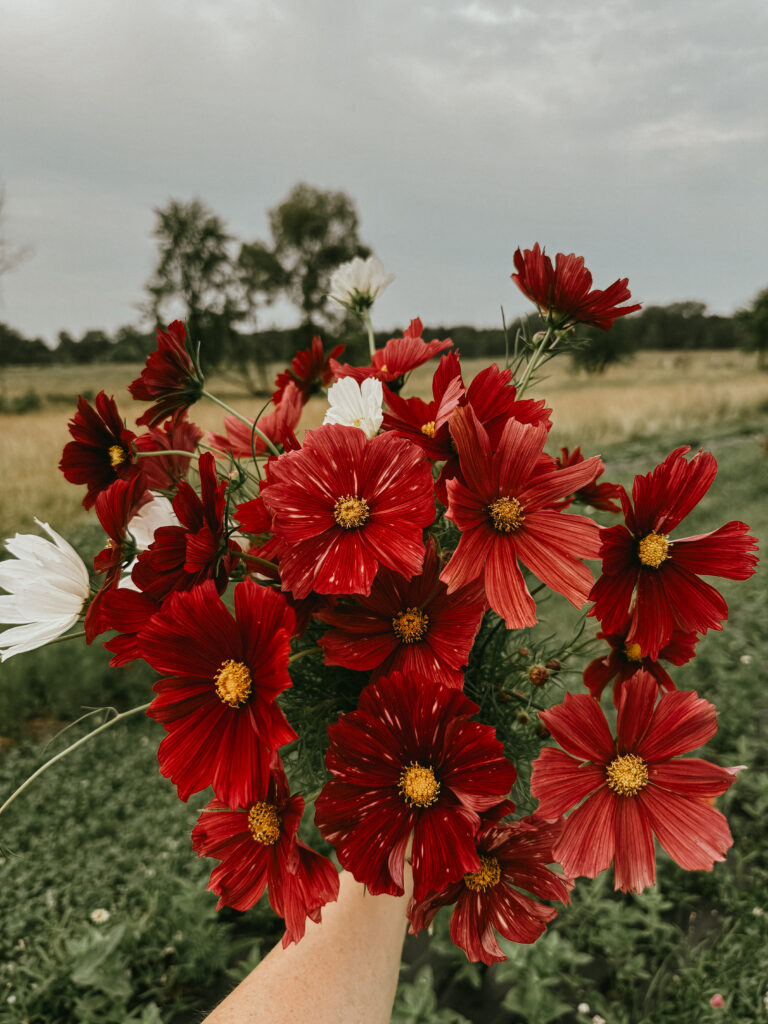
Rubenza is a deep, ruby-red cosmos that brings a richness to arrangements that is hard to find in most cut flowers. The color is warm and moody without being heavy and it works beautifully alongside the zinnia varieties on this list. It is one of those flowers that looks like it belongs in a painting.
Candy Stripe is exactly what it sounds like. The blooms are white with bold pink and rose streaks running through the petals in a way that looks almost hand-painted. It brings a playful, cottage garden quality to the vase and pairs well with just about everything else in a mixed bouquet.
Amaranth and Celosia
Amaranth and Celosia
These earn their place in the cutting garden by doing something that most flowers cannot do: they add drama without demanding all the attention.
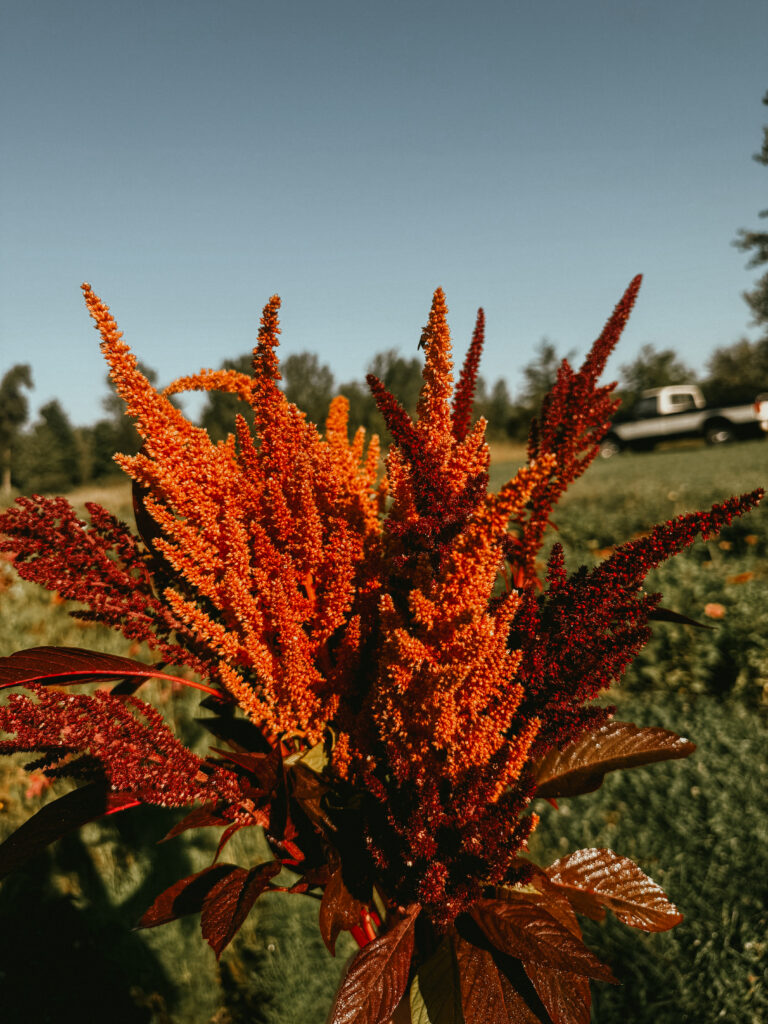
Hot Biscuits amaranth is one of my favorites in this category. The blooms are a warm, toasty tan and bronze that sounds understated until you actually see it in person. It pairs beautifully with the deep burgundy and copper tones of the Evening Sun sunflowers and brings an earthy, harvest-season warmth to arrangements even at the height of summer.
Burgundy amaranth is one of those plants that earns its place twice over. The dramatic burgundy plumes are stunning in arrangements and make a bold backdrop in the garden, but the story does not end there. The seeds that follow are edible, high in protein and can be cooked like rice or popped like popcorn. And if you leave them on the plant, the birds will find them before you do. It adds depth and richness to any arrangement and honestly just makes the whole garden feel a little more alive.
Celosia brings tall, pointed plumes and a velvety texture that makes you want to reach out and touch it. It adds vertical interest to arrangements that rounder blooms simply cannot. All three dry well, which means your arrangements can last well beyond a single week.
Ready to pull the full clean final post together whenever you are!
Sunflowers
Sunflowers are not subtle and that is entirely the point.
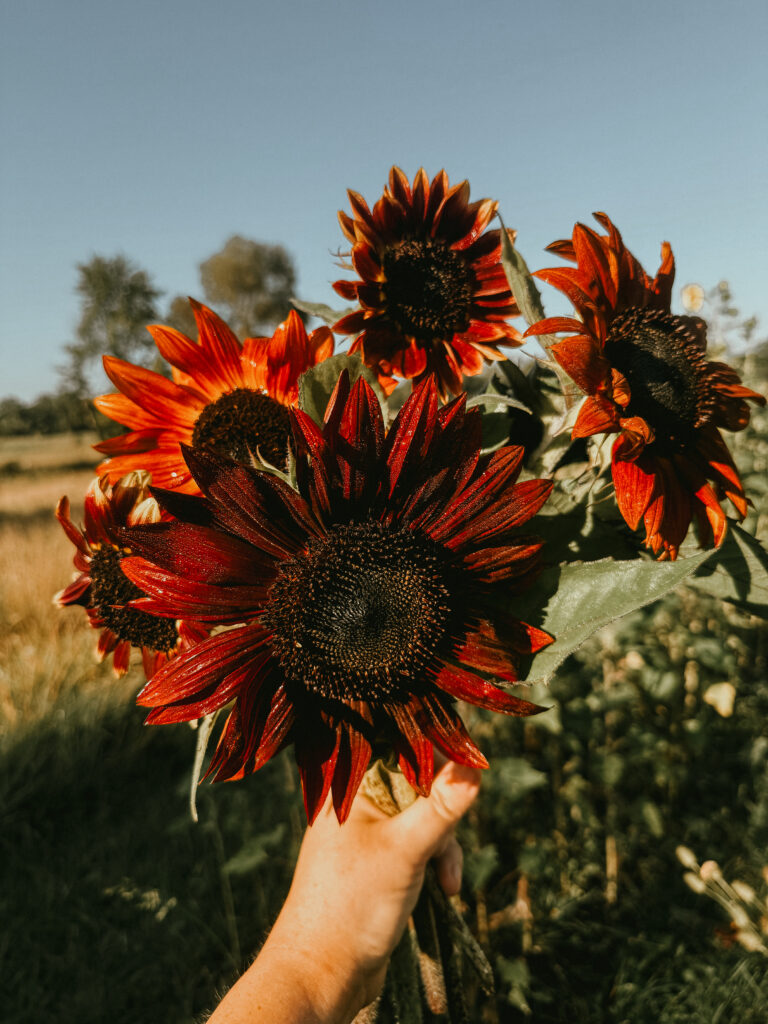
Evening Sun is the variety I recommend most often and the one I would encourage every new cutting garden grower to try at least once. It is a branching sunflower, which means one plant will give you multiple stems across the season rather than a single bloom and done. The color range runs from deep burgundy and chocolate to warm copper and burnt orange. No two stems look exactly alike and that variety is what makes it so useful in mixed arrangements.
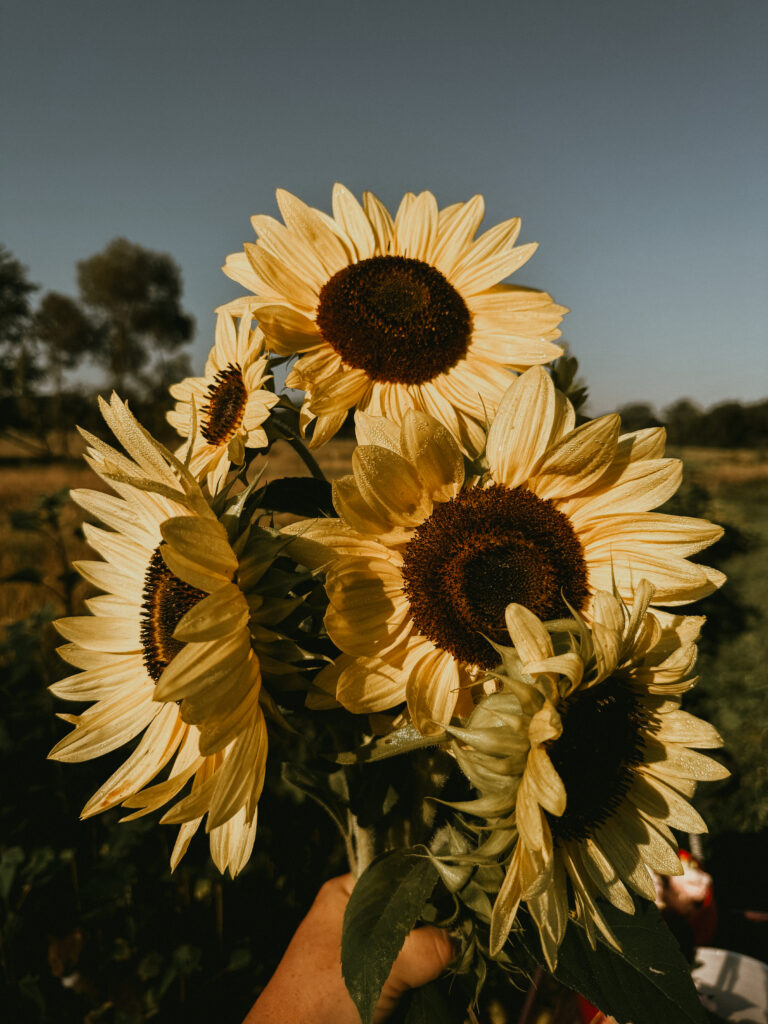
Lemon Queen sunflowers bring a softer, cooler tone that I find myself reaching for when I want something a little unexpected. Pale yellow sunflowers pair beautifully with blushes and whites and makes for a very beautiful arrangement.
Statice
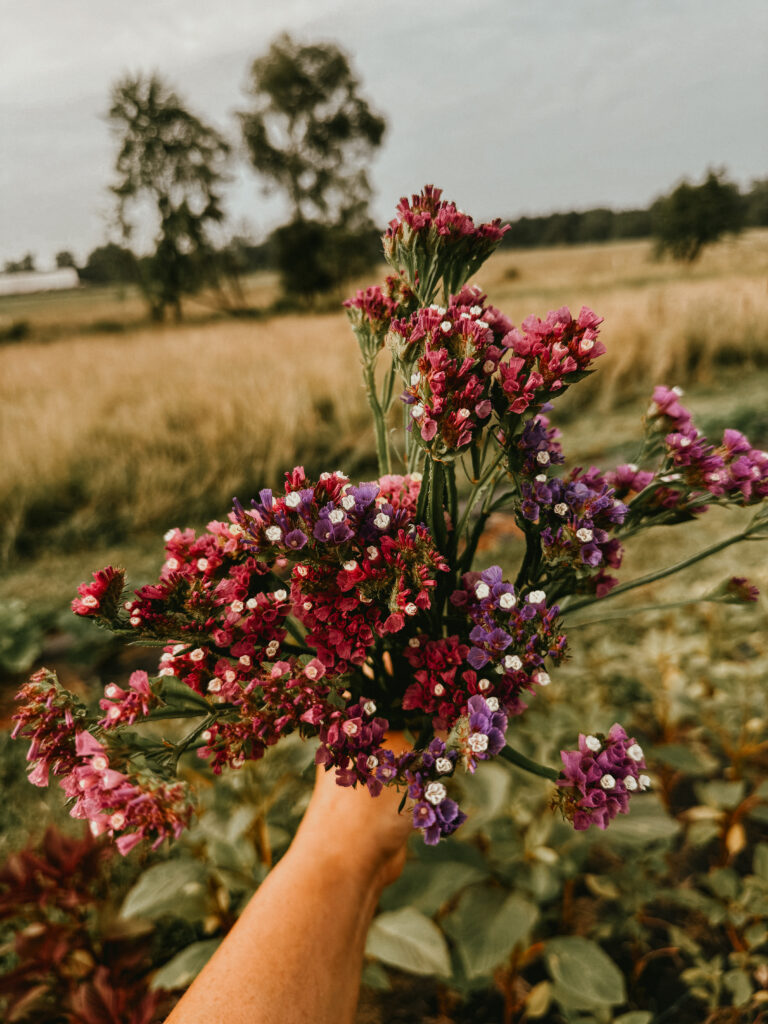
Statice will not be the flower that makes someone stop and say oh, what is that. It is quieter than that. But statice is the flower that makes all the other flowers look better, and in my experience that matters just as much as the showstoppers do.
It fills in arrangements, adds texture and dries beautifully, holding its color for months. You can enjoy a dried stem of statice long after everything else in the vase has had its season. For a first cutting garden, that kind of staying power is worth a lot.
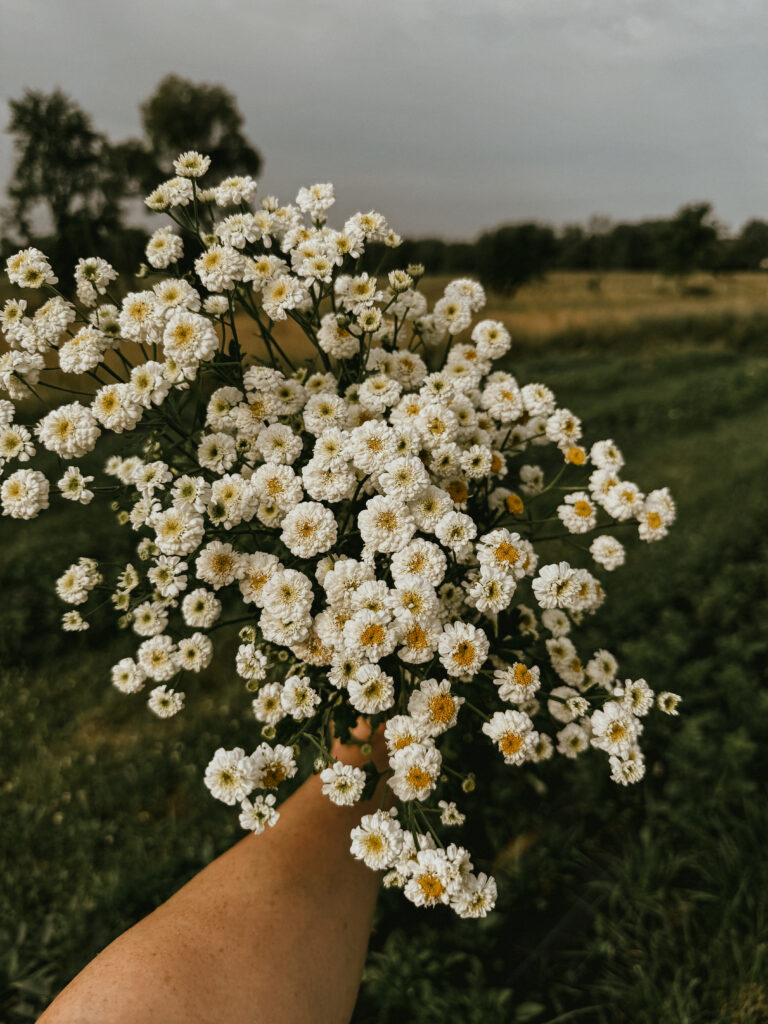
I almost left this one off the list because it feels a little like sharing a secret I have been quietly keeping. But feverfew deserves to be here.
It is cheerful and small and covered in tiny white daisy-like blooms that fill in arrangements like nothing else. It brings a wildflower quality to the vase that softens everything around it. But the best part, the part that makes me love it most, is that it reseeds on its own. You plant it once and it shows back up the following year as if it simply decided to stay. I love a flower with that kind of initiative. For a beginning gardener who is still figuring out what works, a plant that returns on its own feels like a small gift.
These are the varieties I come back to every single year. Not because they are the only flowers worth growing, but because they are dependable and beautiful and they work together in ways that make even a simple mason jar arrangement look like something you thought about for a long time.
If you are ready to plan out your cutting garden this season, my cut flower guide walks through everything from seed starting to succession planting to getting the longest vase life from your blooms. You can grab it here. Flowers on the Homestead Guide.
And one more thing before you go fill your cart. Botanical Interests is offering my community a discount on their order. Use code FALLOWANDBLOSSOM at checkout to save. Every variety on this list is available through them and I genuinely believe in the quality of their seeds. It is one of those partnerships that just makes sense.
Happy growing.
Subscribe to The Homestead Journal
letters from the homestead
If you long for slower mornings, seasonal rhythms, and the quiet beauty of homestead life, we would love to write to you.
Each month, we send a Letter from the Homestead straight to your inbox filled with blog updates, garden notes, seasonal recipes, and reflections from life here at Fallow & Blossom.
No noise. Just thoughtful words, once a month, in step with the season.
Join us and receive our monthly letters.


Comments will load here
Be the first to comment